
Rethinking health innovation for adoption and scale
What does it take for a promising health innovation to become part of everyday care?
Australia has strong science and ambitious innovators. Yet the journey from discovery to widespread use can stall when questions about demand, affordability, evidence and delivery are addressed too late. A technology may advance through development before there is a clear understanding of who will use it, how it will be funded or whether it delivers the benefits that matter most to patients.
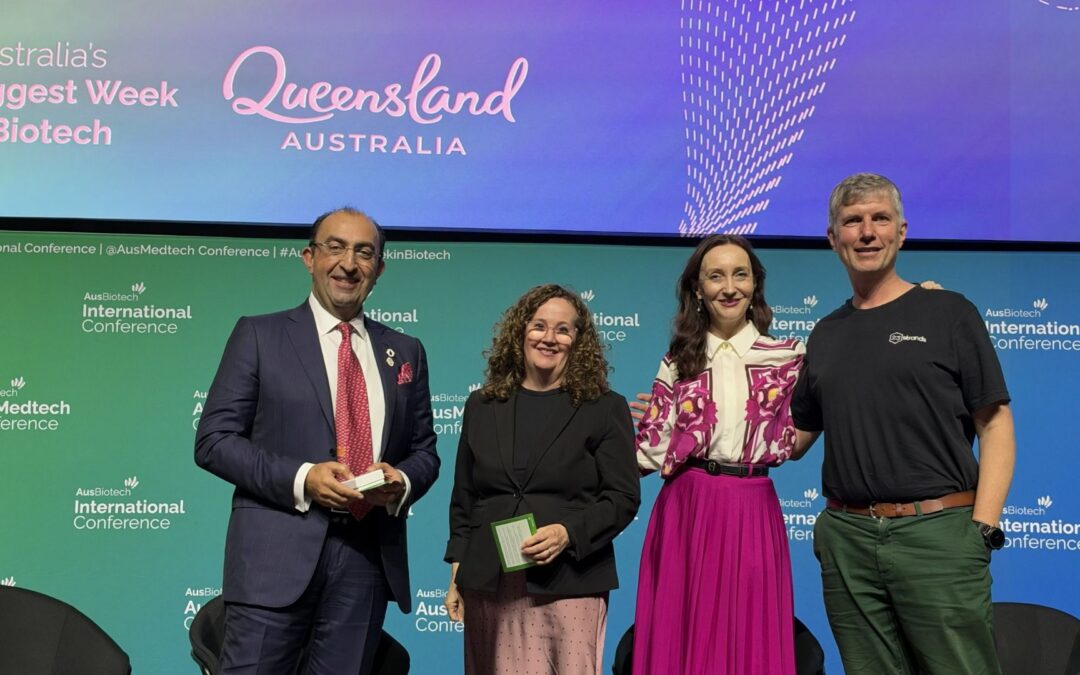
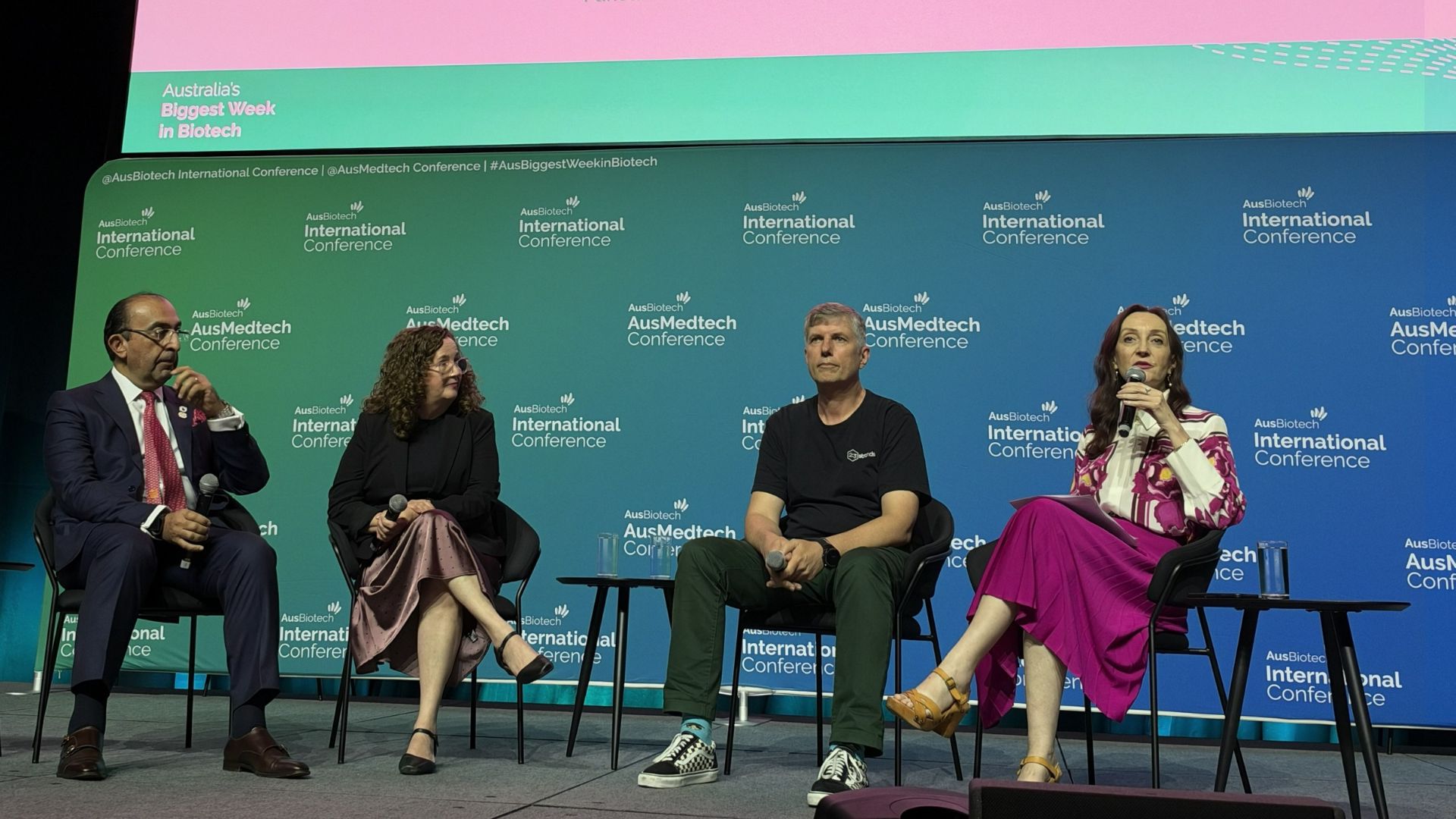
These questions shaped From Lab to Impact: Rethinking Health Innovation for Adoption and Scale at AusBiotech on 22 October 2026. Chaired by InGeNA CEO Dr Erin Evans, the session brought together Australian and international experience to explore how decisions made early in development can improve the prospects for adoption, scale and equitable patient benefit.
Louise Healy, Education and Advocacy Manager at Rare Voices Australia, brought the experience of patients and families. Mark Grosser, Founder and CEO of 23Strands, offered an Australian startup perspective on translating research into clinical practice. Alexander Seyf, Founder and CEO of Autolomous, and Founder of Act for Hope, a collaborative initiative dedicated to accelerating the growth of the cell and gene therapy industry and transforming patient lives worldwide, drew on international experience in the manufacture and delivery of advanced therapies.
Their discussion explored what value-based innovation means in practice: developing promising science alongside an understanding of the people, evidence and systems needed to turn it into better care. The session was premised that innovation should ultimately be measured not simply by scientific breakthroughs, but by the difference we make in patients’ lives.
Bring the three Ps into the picture early
 Alexander offered a useful starting point: the three P’s of patients, physicians and payers.
Each has a different stake in whether an innovation succeeds. Patients need benefits that matter in their lives and a realistic opportunity to access them. Physicians need confidence that they can deliver care safely and effectively. Payers need evidence to inform decisions about funding.
“These 3Ps need to be really intertwined with our scientific journey from day one,” Alexander said.
That early connection can change the course of development. It prompts teams to consider the whole treatment journey, including what happens before and after an intervention, and what it takes for people to reach care in the first place.
For someone living far from a treatment centre, access may involve hundreds of kilometres of travel and weeks away from home. For a clinical team, delivery may depend on coordinating complex processes across organisations, which is where digitisation can make a practical difference. Delays and fragmented communication become part of the patient’s experience.
Planning for these realities early gives innovation a stronger foundation for growth. It also makes equity a practical design consideration, influencing who can participate and who may otherwise miss out.
Startups help turn discovery into something people can use
Between a research finding and an established standard of care lies a demanding period of development, testing and adaptation. This is where startups can make a distinctive contribution.
Mark described their ability to connect people who hold different pieces of the solution. In women’s and reproductive health, that means bringing together expertise in whole genome sequencing, clinical care, mathematics, statistics and artificial intelligence. It also means working closely enough with patients and clinicians to understand where an approach needs to change.
As he put it, “one of the best ways we can do that translation is through smaller, nimble startups”.
The value of that agility is the ability to learn and respond. Researchers may have compelling science but limited time or resources to move it towards clinical use. A startup can help assemble the partnerships, capabilities and resources needed to develop that work further, while keeping a practical clinical problem in view.
Mark’s account also highlighted how much this depends on collaboration. Startups need access to expertise and settings in which new approaches can be tested with appropriate safeguards. His call for supported testing environments recognised both the opportunity to move more quickly and the responsibility to manage uncertainty.
For Australia, this raises an important question about translation: how can we better support the organisations doing the work of connecting discovery with delivery?
Let patients change the plan
The need to adapt becomes particularly clear when an innovation encounters the realities of family life.
Louise described researchers who spoke with families before designing a trial that would require travel. They asked what families would need to participate, including support for siblings and the effects on parents’ ability to work. Those conversations helped expose requirements that a clinical protocol alone might miss.
She also described a trial for a life-limiting childhood condition that required a period of isolation. Families did not want their child to spend precious time apart from others. An earlier conversation could have revealed that problem while the design was still open to change.
“There’s no such thing as too early to ask patients about what’s important,” Louise said.
These examples show how patient partnership can improve the feasibility of development itself. Families bring knowledge that affects recruitment, participation and the relevance of the outcomes being measured.
For that knowledge to influence an innovation, there must be room to act on it. Consultation after the major decisions have been made offers little opportunity to reshape the work.
Build evidence around meaningful benefit
The same principle applies to evidence generation.
If outcomes important to patients are overlooked during development, teams may later struggle to demonstrate the full value of an innovation. Louise described situations where information that could help explain a treatment’s benefit had not been collected.
Early conversations can help identify those gaps before they become obstacles to assessment, funding or access. They connect what matters to patients with the evidence needed by clinicians and decision-makers.
That requires curiosity about what benefit means for different people. Patients may have different priorities, different preferences for information and different ways of living with uncertainty.
Erin challenged assumptions about whether receiving a diagnosis is valuable to a patient. The starting point should be to ask people what they want to know and what that knowledge would mean for them.
A more patient-centred approach makes space for these conversations throughout development and care, including frank discussions about risks, possibilities and uncertainty.
Listening needs to lead to change
“We hear them, but we don’t listen to them,” Alexander observed.
His challenge reaches beyond consultation. Listening becomes useful when it changes a decision, improves a service or prompts a team to reconsider its assumptions.
That learning needs to continue throughout care. Direct conversations can reveal what is helping and what needs to change while there is still time to respond. Audience discussion also highlighted the value of anonymous feedback, particularly when people may feel uncomfortable criticising those responsible for their treatment.
The same willingness to learn applies across the sector. Alexander called for greater sharing of lessons from approaches that have not worked, a principle central to the collaborative approach he champions, so that others can avoid repeating mistakes.
Mark added a reminder about how those experiences are discussed. Reflecting on feedback from the patient community, he emphasised that “the failure is not in the patient”. Language that seems routine in scientific or commercial settings can land very differently with someone who has lived through unsuccessful treatment.
A sector committed to learning needs to make space for that feedback too.
Connecting innovation with adoption and scale
The discussion reinforced an approach that InGeNA actively pursues through partnerships with patients, health consumers and advocates across the organisation. These partnerships inform our work towards more patient-centred research, development and commercialisation, with consumer perspectives contributing to policy development and governance.
Professor Haitham Tuffaha’s contribution to developing the session abstract helped establish its focus on value from the beginning. The Australian and international experiences shared on the panel showed how that principle can guide practical decisions.
Bringing patients, physicians and payers into development early helps clarify what success needs to look like. Supporting startups strengthens the connections between research and clinical use. Planning evidence and delivery together improves the prospects that an innovation can be adopted, funded and made accessible.
For everyone working to move health innovation forward, these are decisions to make while the science is taking shape. They help determine whether a promising discovery can become care that reaches people and makes a meaningful difference in their lives. These conversations held early and often are essential to challenging conventional thinking and inspiring meaningful change across our industry.